
Share
8 min read
California Is Offering $14.2 Million to Recycle Glass from Bars and Restaurants. Here’s How to Get It.
CalRecycle opened applications on September 22, 2026 for the Increased Recycling of Empty Glass Beverage Containers Grant Program, fiscal year 2026-27. There is $14,198,550 available. Awards range from $250,000 to $4 million. The application deadline is October 29, 2026 at 11:59 PM. If your organization serves California restaurants, bars, or licensed on-sale establishments, this grant is worth a serious look.
California’s glass recycling problem has a very specific geography. The state’s overall beverage container recycling program has been running since 1987 and has returned 482 billion bottles and cans since then. But glass consistently underperforms the other materials. In 2024, glass containers had a 60% CRV recycling rate. In the second half of 2024 alone, that number dropped to 55%. The statewide goal is 80%. The gap is real and it’s not closing on its own.
Part of what makes glass particularly difficult is where a significant share of it gets consumed. Beer, wine, spirits, cocktails: the highest-volume glass beverage categories are disproportionately consumed on-premise, in restaurants, bars, hotels, and event venues. Before SB 1013 expanded the California CRV program to include wine and spirits in January 2024, most hospitality venues had little or no formal program for recovering glass bottles consumed on the premises. Staff would sometimes collect beer and soda bottles to redeem the CRV deposit themselves, but wine and spirits bottles largely disappeared into general waste. The Glass Packaging Institute estimates that an average-sized bar or restaurant can generate up to two tons of glass containers per month, and a large hotel can generate up to five tons.
The EGR3 grant program is designed to close exactly that gap: funding the collection infrastructure needed to capture empty glass from on-premise licensed establishments and route it to processing facilities, where it becomes recycled cullet for new glass manufacturing. If your organization has the certification status and operational capacity to run that kind of regional program, $14.2 million is available to help you build it.
Why This Grant Exists: The On-Premise Glass Gap
What SB 1013 changed and why collection infrastructure hasn’t caught up
SB 1013, signed in 2022 and effective January 1, 2024, added wine and distilled spirits to California’s CRV beverage container program. This was a meaningful expansion. Wine and spirits are predominantly sold in glass, and the bottles are large, high-quality containers that make excellent cullet for glass manufacturers when collected in a clean, source-separated stream. Adding CRV deposits to these containers created a financial incentive for their return that hadn’t existed before.
What SB 1013 didn’t create was the physical infrastructure to collect those containers from the places where most of the wine and spirits volume actually gets consumed: licensed on-sale establishments. A winery tasting room, a neighborhood wine bar, a hotel restaurant, a cocktail lounge: these businesses generate significant glass volume, but they’re not set up to participate in the CRV collection system in the way a supermarket or a home consumer would be. They don’t typically bag up their empty wine bottles and drive to a redemption center. Without a purpose-built collection program that comes to them with bins and pickup, that glass flows into the general waste stream or, at best, gets co-mingled into curbside recycling where contamination rates are high and cullet quality is low.
The quality distinction matters more than it might seem. CRV-collected glass is 98% usable as cullet. Curbside-collected glass, by contrast, carries 30 to 40% contamination from broken glass mixed with other recyclables, and much of it gets landfilled at the end of sorting lines rather than processed into new containers. Getting glass out of the on-premise channel through a dedicated, source-separated collection program isn’t just a volume play. It’s a quality play that changes whether the recovered material can actually go back into new glass manufacturing.
The Glass Recovery Gap
California’s 2024 glass CRV recycling rate was 60%, falling to 55% in the second half of the year. The statewide goal is 80%. An average-sized bar or restaurant can generate up to 2 tons of glass per month. A large hotel can generate up to 5 tons. That volume is largely invisible to the current CRV collection infrastructure because it’s consumed on-premise with no dedicated collection pathway back into the recycling system.
What the Grant Funds, Who Can Apply, and What the Money Can Buy
Eligibility, eligible uses, and the match requirement that matters
Who Can Apply
Eligibility is tied to certification status under the California Beverage Container Recycling Program. The following entity types can apply:
- →Certified Recycling Centers (RC) including those authorized to pay CRV refunds directly to consumers
- →Certified Collection and Drop-Off Programs (CP)
- →Certified Community Service Programs (SP)
- →Local governments (cities, counties, or cities and counties as defined in PRC section 30109), including non-profit and for-profit entities operating under one of the certified program types above, and qualifying Tribal entities
One important nuance: only Certified Recycling Centers can pay out CRV refunds to the establishments they collect from. Organizations operating as CP or SP programs can run collection and transportation programs, but they cannot pay CRV to the establishments. If your program model includes CRV payouts as a participation incentive for restaurants, you need Certified Recycling Center status to do that lawfully.
What the Grant Money Can Be Used For
Grant funds can cover three categories of expense, and all three need to be part of a coherent regional pilot program:
| Eligible Use | What This Means in Practice |
|---|---|
| Purchase of bins | Buying the actual collection containers placed at participating restaurants and licensed on-sale establishments this is where CleanRiver’s glass collection bins fit directly into the program model |
| Collection and consolidation | The operational cost of picking up filled containers from participating establishments and consolidating the glass at a central point before transport |
| Transportation to a glass processing facility | Moving the consolidated glass from the collection consolidation point to a certified glass processor that can produce usable cullet for manufacturers |
Every funded project must collect from at least five restaurants or on-sale licensed establishments operating under the Alcoholic Beverage Control Act. There is no upper limit on the number of establishments a program can serve, and programs operating across multiple cities or counties are eligible.
The 100% Match Requirement
This is the requirement that needs the most attention from prospective applicants. The EGR3 grant requires a 100% match: for every dollar CalRecycle awards, the applicant must provide an equal amount from another source. A $1 million grant requires $1 million in matched funding. A $4 million award requires $4 million in match.
Critically, other CalRecycle grant funds cannot be used as the match. The match has to come from genuinely separate sources: local government contributions, private investment, foundation funding, earned revenue from the program, or other non-CalRecycle public funds. Organizations that assume they can layer CalRecycle grants against each other to satisfy the match will need to rethink their funding model before applying.
total available FY 2026-27 ($4M annual + $10.2M cycle 2 carryover)
award range minimum $250,000, maximum $4,000,000
match required equal matched funding from non-CalRecycle sources
The Application Timeline: Every Deadline That Matters
From questions to awards to program completion
| Date | What Happens |
|---|---|
| September 22, 2026 | Grant cycle opens; applications become available in GMS (Grants Management System) |
| October 6, 2026 | Q&A period closes all questions must be submitted in writing via email to [email protected] by this date |
| October 29, 2026 | Application deadline 11:59 PM via GMS. Customer service available only until 4:00 PM on this date. Do not wait until the last day. |
| December 1, 2026 | Secondary deadline required authorization documents and EPPP Policy must be uploaded in GMS by this date if not submitted with the application |
| January 19, 2027 | CalRecycle considers funding recommendations and conditionally awards grants (tentative) |
| April 1, 2029 | Performance period ends deadline for final report and final payment request |
The Q&A deadline is worth paying attention to. October 6 is your last chance to submit written questions about the application requirements. If anything in the guidelines is unclear, especially around eligibility, the match requirement, or how CRV payouts interact with the program structure, send your questions before that date. CalRecycle posts questions and answers publicly on the program Q&A page, so reading what other applicants are asking can also surface issues you hadn’t considered.
Where the Bins Fit In and Why Collection Infrastructure Determines Program Success
What good on-premise glass collection looks like in practice
The grant explicitly funds bin purchase as one of its three eligible uses. That’s not a coincidence. The collection container placed at a restaurant or bar is the first link in the entire recovery chain, and if that link is wrong, nothing downstream matters. An undersized bin that overflows between pickups, a container without clear labeling that attracts mixed waste, or a bin placed in the wrong location within a kitchen or service area: any of these failures contaminates the glass stream or drives non-participation, and both outcomes undermine what the grant program is trying to achieve.
Good on-premise glass collection bins for restaurants and licensed establishments need to meet a specific set of requirements that differ from standard recycling bins. They need to be purpose-designed for glass, with drop-slot apertures or wide openings that accommodate bottles without breakage risk. They need to be clearly labeled for glass only, with signage that communicates to kitchen and bar staff what goes in and what doesn’t. They need to be sized to a restaurant’s actual generation rate between pickups, which varies significantly by establishment type and volume. And they need to be durable enough to be placed in back-of-house environments, rinsed occasionally, and handled by collection crews on a regular service schedule.
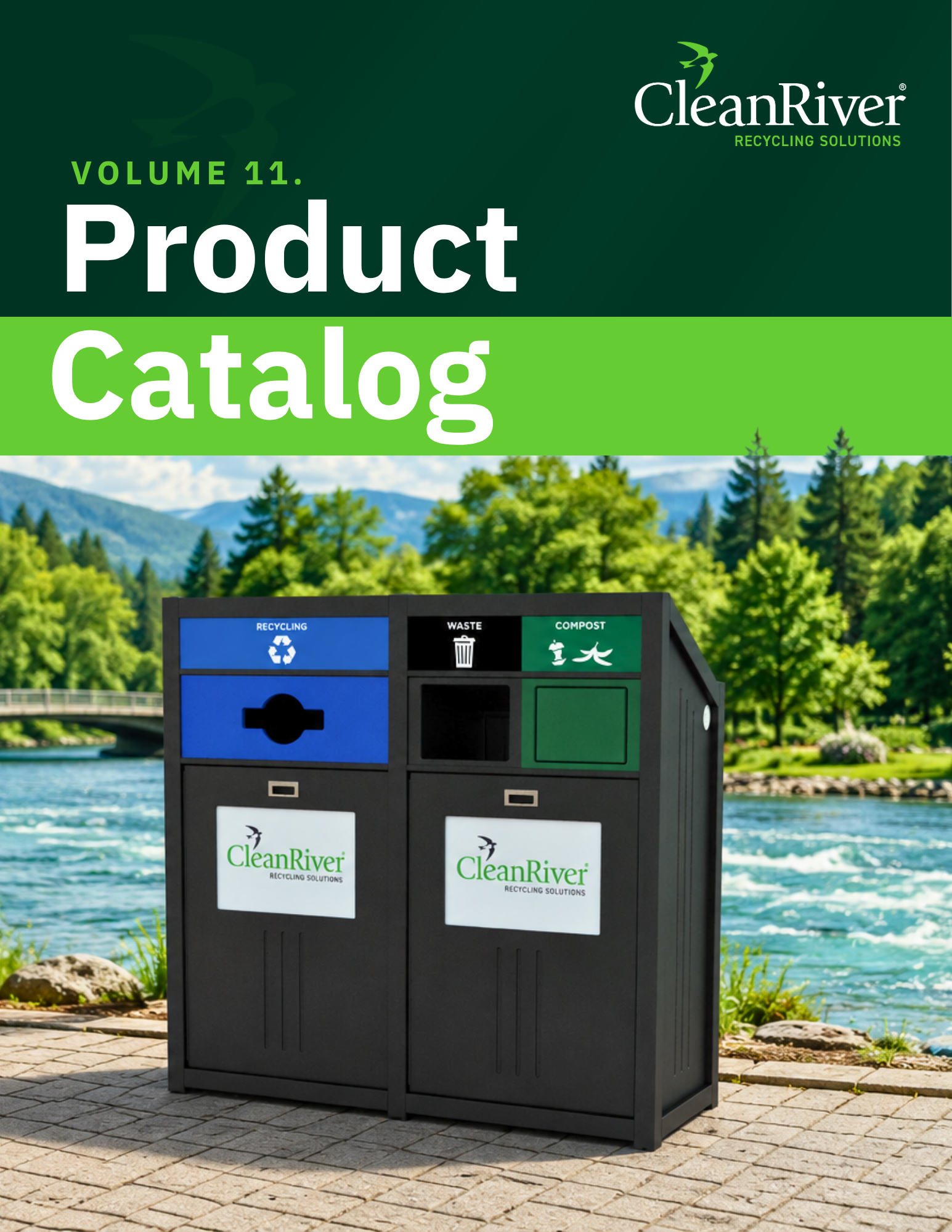
CleanRiver designs and supplies exactly this kind of purpose-built collection infrastructure. For organizations building a grant-funded glass collection program serving California’s licensed establishments, our bins can be specified, ordered, and deployed at scale across the establishment network your program will serve. The grant funds the purchase; CleanRiver supplies the containers that make the collection work.
CleanRiver and Glass Collection Programs
CleanRiver’s multi-stream collection stations and single-stream glass collection bins are configurable for the exact specifications on-premise glass programs require: capacity matched to establishment volume, aperture designs that protect glass quality, and custom signage that communicates program eligibility clearly to bar and kitchen staff. For organizations applying for the EGR3 grant and building out their collection network, we can work with your program design team on bin specifications before your application is submitted. Contact CleanRiver to discuss your program requirements.
Six Steps to a Strong Application
What to do in the time remaining before October 29
| 1 | Read the full grant guidelines and Procedures and Requirements before anything else. The application guidelines and the Procedures and Requirements document are both linked from the CalRecycle EGR3 program page. The Procedures and Requirements are currently in draft form but will become final upon grant agreement issuance. Read both before committing resources to an application. |
| 2 | Confirm your certification status and CRV payout authority. Determine whether your organization is a Certified Recycling Center, CP, or SP program. If your program model involves paying CRV refunds to participating establishments, confirm you hold or can obtain Certified Recycling Center status. The requirements in Section 2525(k) of the California Code of Regulations apply to any entity seeking to pay out CRV. |
| 3 | Map your participating establishment network. The minimum is five on-sale licensed establishments. Identify your target establishments, confirm they are licensed under the Alcoholic Beverage Control Act, and document their locations across the cities or counties your program will serve. A larger, geographically coherent network strengthens the regional pilot program narrative your application needs to make. |
| 4 | Line up your match funding before you submit. The 100% match requirement means you need an equal amount of non-CalRecycle funding committed or demonstrably available before the grant period begins. Identify your match sources, get letters of commitment from local government partners or other funders, and make sure those commitments are documentable. An application without a credible match funding plan is unlikely to be competitive. |
| 5 | Specify your bins early and include them in your budget. Bin purchase is an eligible grant use, and the specification of your collection containers affects your collection logistics, your establishment participation rates, and the quality of the glass stream you deliver to processing. Work with your bin supplier on specifications before your application is complete. For organizations working with CleanRiver, we can provide specifications and pricing that support your application budget. Contact us to discuss. |
| 6 | Submit via GMS well before October 29. The customer service cutoff is 4:00 PM on October 29. The application deadline is 11:59 PM. If anything goes wrong with your GMS submission in the final hours and customer service isn’t available, you have no recourse. Submit early. If you encounter access issues with GMS, email Grant.Assistance.ca.gov immediately rather than waiting to resolve it. |
California’s glass recycling program has been running for nearly four decades and has diverted hundreds of billions of containers from landfill. But the on-premise licensed establishment channel has been a persistent gap in that system, a high-volume glass source with no dedicated collection pathway back into quality cullet production. SB 1013’s expansion of the CRV program to include wine and spirits in 2024 created the financial architecture for recovery from that channel. The EGR3 grant creates the funding to build the collection infrastructure that puts it to use.
For organizations with the certification status and operational capacity to run a regional glass collection program serving California’s bars, restaurants, and licensed establishments, this grant is one of the most clearly scoped and directly applicable funding opportunities available in the state’s recycling grant portfolio. The deadlines are tight. The match requirement is substantial. But the program design is clear, the eligible uses are practical, and the need it addresses is genuine.
The application deadline is October 29, 2026. If your organization is eligible and the program model fits, there’s no reason to wait on this one.
Official Grant Resources
- →California Grants Portal EGR3 FY 2026-27
- →CalRecycle EGR3 Program Page guidelines, procedures, and Q&A
- →CalRecycle Grants Management System (GMS) online application portal
- →Grant contact: Alysa Erickson, (916) 658-4822, [email protected]
About the Author
Andrew Bell
Vice President, Sales and Marketing, CleanRiver Recycling Solutions
Andrew Bell has spent more than 20 years working with recycling program operators, municipalities, and sustainability teams across North America on the operational realities of getting collection infrastructure right. As VP of Sales and Marketing at CleanRiver Recycling Solutions, he works with organizations building grant-funded recycling programs and helps them think through the bin specifications, placement strategies, and signage requirements that determine whether a program delivers its diversion targets or falls short of them.
A graduate of Graceland University and two-time National Sales Manager of the Year, Andrew brings a practical operational lens to every recycling infrastructure conversation: what does the collection system need to do, and what does the physical setup need to look like for that to happen reliably at scale?
Applying for the EGR3 grant and need bin specifications?
CleanRiver supplies purpose-built glass collection bins for on-premise licensed establishment programs. We can work with your program team on specifications and pricing to support your grant application budget before the October 29 deadline.